
Ph.D candidates
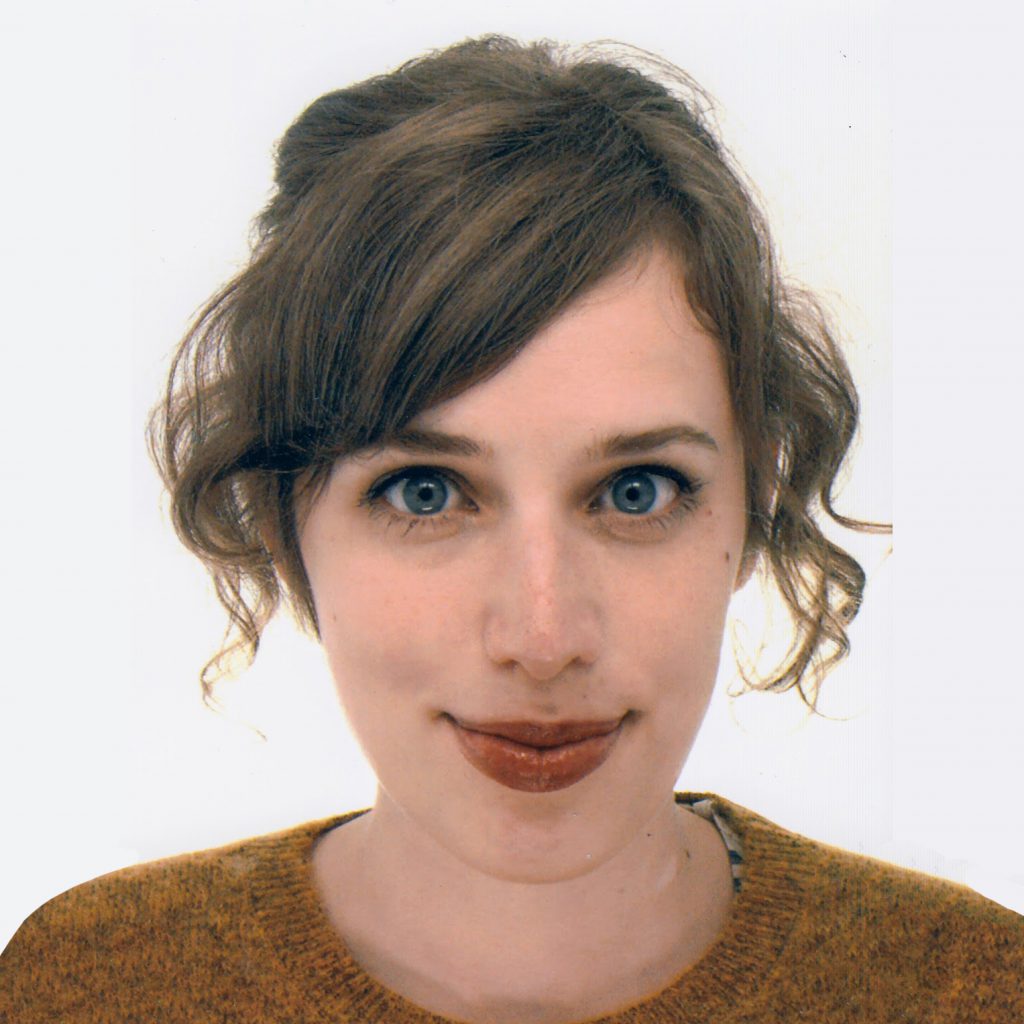
Joanna Isselé was a Ph.D candidate working on the perceptual representation of Chinese characters (funding: grant from F.R.S.-FNRS). A first question of her Ph.D was to investigate the structure of orthographic representations involved in Chinese character recognition. The second question addressed the role of statistical learning in the emergence of perceptual units for Chinese character recognition. I was the promotor of the work (co-promotor: A. Content). Joanna had her viva on Septembre, 2023.
Margaux Genucchi was a Ph.D candidate working on the role of reading motivation and engagement on reading abilities and print exposure. She aimed at developing reliable measures of reading engagement, especially using eye tracking movements. She also wanted to examine what parameters impact reading engagement so that to produce positive effect on reading skills. She examined these issues in adults and planed to do so in adolescents too. I was the promotor of the work. Margaux stopped her research work after 2 yers and is now working in the artistic domain.

Virginie Drabs was a Ph.D candidate working on the processes of visual word recognition in adults, with a specific focus on the consonant/vowel structure of letter strings (funding: grant from the F.R.S.-FNRS, 4 years). Following the work I’ve conducted with A. Content on the CV pattern of words, the aim of the Ph.D thesis was to examine whether there is some evidence of an automatic categorization of letters into consonant/vowel categories. I was the co-promotor of the work (promotor: A. Content). Virginie had her viva on December 19th, 2016.
Camille Vidal was a Ph.D candidate working on the emergence of the consonant/vowel categories of letters, both in adults and children (funding: IAP of BeLSPO 1 year + mini-ARC seed money 1 year + grant from F.R.S.-FNRS 2 years). The basic question was: Where does the C/V categories come from? Camille examined different hypotheses, according to which the categories could ensue from phonological knowledge on phoneme categories, from orthographic regularities in the script and/or from mere declarative knowledge. I was the promotor of the work (co-promotor: A. Content). Camille had her viva on November 23rd, 2018.
Post-doc fellows
Mari Ranzini was a post-doc fellow whose main expertise area is primarily numerical cognition. She joined the LCLD to work on a MEG project conducted by Alain Content and myself (funding: IAP Program of the Belgian Science Policy Office, 2 years in 2016-2017). The aim was to assess with converging behavioural and neuro-imaging techniques the hypothesis that early stages of orthographic encoding entail the extraction of units corresponding to letters groups centered around each vowel or cluster of adjacent vowels. Mari is now back to Italy.
Karinne Sauval was a post-doc fellow working on processes of visual word recognition in both adults and children (funding: ULB subside, 1.5 years in 2017-2018). She worked more specifically on the development of sensitivity to orthographic regularities in adults via statistical learning, and on the impact of this sensitivity on reading/spelling abilities, using both behavioral and EEG measures. Karinne is now a teacher in France and a LCLD scientific collaborator.
Temporary researchers
Emeline Boursain was a temporary researcher working on the development of sensitivity to orthographic regularities in adults (funding: IAP of the Belgian Science Policy Office, 1 year in 2016-2017). She has also developed an interest in the processing of diacritics marks in written words during her master thesis. She currently works as a neuropsychologist and a speech therapist in a school.
Joanne Content was a temporary researcher working on the impact of a daily session of independent reading in primary schools (ULB internal funding). She now works outside of academia.